

Nitrogen-rich microalgal biomass, cultivated in brines from tuna canneries, was subjected to enzymatic hydrolysis to obtain a BBF (plant biostimulant). The obtained product contained 0.59% (w/v) total nitrogen and 32 g/L of total aminoacids, with 75% of them (24 g/L) in free form. The aminogram shows a complete profile of available amino acids (Fig 1).
This 100% algal-based product includes a diverse range of nutritive components and traze elements that are released during the hydrolysis process, such as carbohydrates (1.5% w/w), phosphorus (0.06% w/v), minerals (Ca, Cd, Co, Cu, Cr, Mg, Mn, Na, Zn and S), sterols, vitamins, and essential fatty acids. These nutrients primarily originate from the brine that supports microalgae growth.
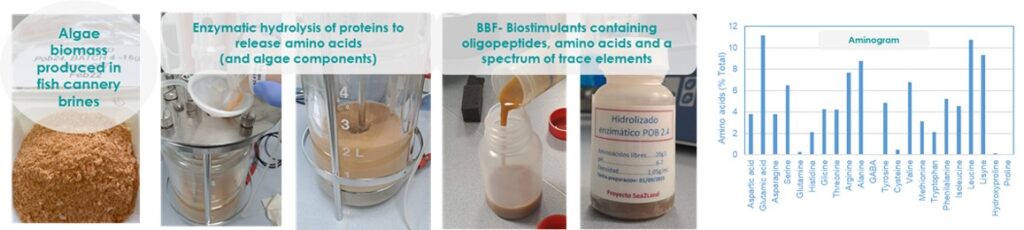
Figura 1: Enzymatic hydrolysis of algae biomass and amino acid profile of the obtained product (BBF-biostimulant)
Microalgae are currently acclaimed for their value as bio-based fertilizers, biostimulants, and other agrochemicals suitable for the replacement of synthetic alternatives. Algal-based BFFs can be used for foliar application and/or as soil amendments at recommended dosages of 1-3 ml/L for foliar application, and 5 L/ha for soil use. However, since these products have a partially non-specific composition, the usage dosage must be carefully established for each specific cultivar.
Further information: https://www.frontiersin.org/articles/10.3389/fpls.2023.1073546/full